Jun 30 2010

Hussein Fires General Stanley McChrystal

Full Article here, in case you didn’t read the article that cost the General his career.  I don’t read Rolling Stone, but I did read the article since they were firing a man over it. Yes, I know he submitted his resignation, but I can assure you he was given a choice of getting fired or submitting that.

First and foremost, I think it was a stupid move to even talk to Rolling Stone magazine.  IF you were going to do that, do it without your aides and preferably have them submit their questions in writing first so you can draft a response that won’t offend your thin-skinned boss.  Then you can answer any followup questions and be done with it.  It seems most of the bad quotes are from his aides.  I don’t really care for this man because he voted for Obama.  That alone tells me he is probably more of a politician than a soldier.  It also tells me he does not have a firm grasp on which presidential candidate would have followed the path of our founding fathers versus the path of hype, anti-gun pursuits,  and socialism.  So I am glad to see him go.

That all aside, I think he got a bad deal and was the scapegoat for Obama to make it look like he was tough leader.  Hussein stated “the conduct represented in the recently published article does not meet the standard that should be set by a commanding general. It undermines the civilian control of the military that is at the core of our democratic system. And it erodes the trust that’s necessary for our team to work together to achieve our objectives in Afghanistan.”

I can tell you that almost EVERY veteran and active duty member I know can’t stand the sight of this President or the top 5 civilian leaders and much of Congress.  Primarily because they are the enemy within that is taking this country down a path of self destruction and ignoring the wishes of the people.  They see the wars going back to politicians running the war and setting unrealistic rules up so there will be failure (see Vietnam reasons for failure).

I think the aides should have kept their mouth shut around the media (like we all do) to give the appearance of support of this poor leader.  Even though Hussein sucks as a leader, you can’t openly be against him or you might get fired.  In this case you got your boss fired.

I wouldn’t want  to be the Generals replacement.  The cards are stacked against him.  I hope for our troops sake, that the mid-term elections in 180 days makes REAL change for the country.


Jun 29 2010

Supreme Court-2nd Amendment Victory-MCDONALD ET AL. v. CITY OF CHICAGO, ILLINOIS

http://www.supremecourt.gov/opinions/09pdf/08-1521.pdf

A well regulated Militia, being necessary to the security of a free State, the right of the people to keep and bear Arms, shall not be infringed.”

This should have been a no-brainer that WE THE PEOPLE have a RIGHT to bear arms.  It really was a no-brainer until the last 3 decades or so.  People have had decreasing amounts of brain capacity and common sense when it comes to the Second Amendment and politics in general.  This is easy to see just by noticing almost half of America doesn’t even bother to vote in one of the most meaningful elections in the last 60 years and probably the next 60 years.  Because of that, we now have an idiot socialist for President and a majority of idiots controlling congress.  We will also get another left wing radical judge shoved down our throats because of the growing ignorance of America.  What really scary about this ruling is how close it was.  The radicals have succeeded in getting a near majority in the highest court in the country.  VERY scary.  Lets hope we take back Washington in the fall and in 2012.  We will need to repeal some socialist laws that were past and with luck, a liberal Supreme Court idiot will die off or quit while a patriot is in office, unlike now.

OK, on to the ruling.  The most important part is below.  Read the actual ruling if you want all their citings or want to read the dissenting idiots  views (again, very scary).

“Two years ago, in District of Columbia v. Heller, 554

U. S. ___ (2008), we held that the Second Amendment protects the right to keep and bear arms for the purpose of self-defense, and we struck down a District of Columbia law that banned the possession of handguns in the home.The city of Chicago (City) and the village of Oak Park, a Chicago suburb, have laws that are similar to the District of Columbia’s, but Chicago and Oak Park argue that their laws are constitutional because the Second Amendment has no application to the States. We have previously held that most of the provisions of the Bill of Rights apply with full force to both the Federal Government and the States. Applying the standard that is well established in our caselaw, we hold that the Second Amendment right is fully applicable to the States.”


Jun 27 2010

The Overton Window

This post is in regard to the actual Overton Window concept, not Glenn Beck’s book that was released this month. I did post a link regarding the book here.

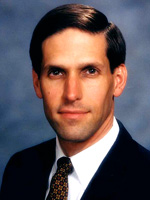
To explain what the Overton Window is, lets go right to the source. Mr Joe Overton (left) died in a plane crash on June 30th, 2003 but continues to be a source of inspiration.  He worked in a “Think Tank” at the Mackinac Center.  Mr Overton thought the Think Tank should focus on education of the people and lawmakers to evoke change in politics.  At this point, I should note this Think Tank is labeled as “Far right” by the “Far Left.”  This should come as no surprise but, in fact, they are “a nonpartisan research and educational institute dedicated to improving the quality of life for all Michigan citizens by promoting sound solutions to state and local policy questions.”

The Mackinac Center explains the window as Joseph Overton’s observation that “in a given public policy area, such as education, only a relatively narrow range of potential policies will be considered politically acceptable. This “window” of politically acceptable options is primarily defined not by what politicians prefer, but rather by what they believe they can support and still win re-election. In general, then, the window shifts to include different policy options not when ideas change among politicians, but when ideas change in the society that elects them.”  Mr. Overton’s theory has some basis in complex public choice economics yet it’s very easy to grasp.

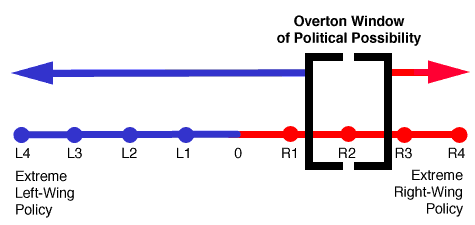
The window slides up and down, NOT left and right. This was done on purpose so it would not confuse people.  Most of us think in terms of left and right politics.  A blog here, wrongly shows the window as moving left and right. It also attempts to show that the window is way over to the right.  I have to digress some so please bare with me.

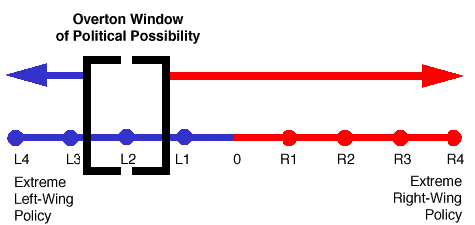
Assuming it even worked this way, it has never been on the “right” unless you were actually a person with far left beliefs.  This diagram was made under President Bush Jr so I can see a liberal, socialist, or just radical extremist thinking it was way over to the right.  For example, if you were an anti-war idiot that thinks nothing is worth fighting for, then the window would appear to you as shifted way to the right.  Again, this is NOT the Overton Window, but a modified use of his window.  If this same graph reflected reality in the current political environment of 2010, it would actually look like this:

My views are based on our Founding Fathers ideas for our country.  It is also based on documents critical to keeping the correct course for the United States.  This includes, but not limited to; The United States Constitution, The Federalist Papers, Thomas Paine’s Common Sense, and any similar documents I could read that would let me peer into the minds of some of the greatest men to ever walk this earth.  These views will undoubtedly get labeled as “Far Right” thinking to people with ideas of government that have never worked anywhere. Ideas that the Founding Fathers seemed to go out of their way to avoid.  These Socialists, Communists, Liberals, progressives, (insert radical, anti-American ideology here), all seem to think of the U.S. Constitution as some sort of Wikipedia for them to mold on the whims and wants of a small portion of the populous.  When it becomes the U.S. ConstiWiki, our country will fall shortly after and rightly so.  Digression’s over.

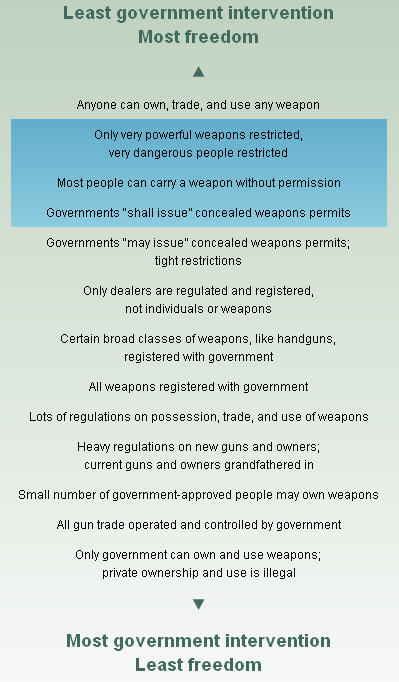
Now, a little more on the ACTUAL Overton Window.  This interactive illustration explains it best.  Basically Mr. Overton put a range of policies in a vertical column or axis.  Overton’s Window covers a range of policies considered to be politically acceptable at a given point in time.

If it’s acceptable in the eyes of the public, then the window brackets or covers it.  Political decisions inside this window can be made without fear of losing public office.  He also placed Most Freedom (i.e. less government control) at the top and Least Freedom (i.e. more government control) at the bottom.  The example above is from the Mackinac Center.  I placed the window where I think it currently is in regards to gun ownership in the USA.  Yes, it could shift down a bit more, but this is just an example.  This is on a federal, not local level.  As a side note, gun ownership is guaranteed by the Second Amendment to the U.S. Constitution, but several states and cities defy this document and our federal government in an attempt to shift the Overton Window down.  If this can be done, Americans might look the other way as a constitutional right is taken away.  More likely some extremist Supreme Court Justice will change the definitions of the Constitution and pretend you never had a right in the first place.

If you can move the window, then ideas that are currently considered outside the window can become acceptable.   Mr. Overton gave degrees of acceptance:

-Unthinkable
-Radical
-Acceptable
-Sensible
-Popular
-Policy

The Overton Window can be applied on smaller scales like city, state, or personal.  It is generally used in reference to policies of the United States federal government.   The Overton Window of a state may be well out of sync with the nation. California, for example, has put gay marriage inside their Overton Window, but the national Overton Window still considers it in the Radical range.

The window is moved by the people, not the politicians.  Joseph Lehman, President of the Mackinac Center, wrote “many believe that politicians move the window, but that’s actually rare. In our understanding, politicians typically don’t determine what is politically acceptable; more often they react to it and validate it. Generally speaking, policy change follows political change, which itself follows social change. The most durable policy changes are those that are undergirded by strong social movements.”  Mr. Lehman further stated “lawmakers who support policies outside the window are one of two kinds — true leaders [Ronald Reagan perhaps?] who have the rare ability to shift the window by themselves, or politicians who risk electoral defeat because they are perceived as out of touch [Obama, Reed, Biden?].”

So with the Overton Window explained, I’d like to make some comparisons to the current political environment.  The current administration feels that because they won the election, they have a good handle on where the Overton Window currently sits.  The Obama administration and Congress continues to pass legislation that is clearly unpopular with the majority of Americans.  This leads me to believe he sees himself as a “true leader.”  When in fact, I think he easily falls in the “out of touch” category.  I think most of Congress falls in that category now.  The rise and growth of the Tea Party is good evidence of the backlash from action after action taken outside the Overton Window.  Instead of reversing their course, the Obama Administration and Congress has increased its radical actions.  The socialization of medical care, spending increases that dwarf  any administration in the history of the U.S., H.R. 5175 attacks on grassroots efforts and free speech, and numerous other acts of idiocy [many mentioned on this blog in other topics].

The Obama administration won an election where only 56.8% of the voting population turned out. That number is nothing unusual.  Irresponsibly, about half of America doesn’t even care to vote.  So anyway, they convinced approximately 27% of American voters to vote for them.  Much of this was done with the help of the media to convince the “ignorant masses” to vote for “change” and “hope.”  I don’t mean the people are ignorant per se, just that many American’s are ignorant of politics and history.

Those that don’t vote are the most ineffectual of citizenry.  These individuals are ignorant of history and what a privilege it is to vote.  They are also unaware of how remarkably important every vote is, even in our electoral system.  They wrongly assume the right decisions will be made for them by others.  The other piece to the ignorant masses is the portion of the population that was taken it by what even I have to admit was an excellent marketing campaign.  The problem is, NO ONE that researched the candidates should have even considered voting for him.  Many of these people (or sheeple) only watched CNN and others who gave 80% of their coverage to Obama. They let the media influence their vote rather than research it themselves.  The only votes Obama SHOULD have received would have been from the fringes of society. Those with racial prejudices (a “black” man is running so I have to vote for him because I’m black too), the far left, and those with extremist ideology.  That is not all the vote he captured.  Many self proclaimed Independents voted for him because they fell into being influenced by the media.  Luckily, many recognize their mistake now.  Some got swept up in the hype of logos and slogans for “change.”

Several others said they were “Blue Nose Democrats” so they felt obligated to vote that way.  Even a few (not all) of my black friends voted for him.  Conservative, military guys!  One guy is so caught up in the hype that he is actually still defending Obama, trying to justify socializing medicine,  justifying spending trillions, and justifying redistribution of wealth.  If President Bush had done these things they would be ready to fight over it.  One asked me if I was racist! I explained I hate Obama’s white half as much as his black half, so no.  Seriously though, I hate his beliefs and traitorous behavior.  I could care less about his skin.

The Obama administration and supporting liberal congressmen are aware of the Overton Window.  They continue to enjoy the aid of most major news stations to keep pumping the ignorant masses with propaganda.  They know the only way to “shift the window”  is to influence enough people.  This can be done if the people stay part of the ignorant masses.  If the people don’t read history, historical documents, and compare where we were supposed to be going with where we are now, then we are doomed to stay on the same destructive path.  The Obama administration sugar coats reality with words that camouflage the truth.  Like calling illegal immigrants undocumented workers or it’s no longer a War On Terrorism its whatever the politically correct word is for that now.   They chocolate coat fecal matter and tell you its a chocolate bar.

I am hopeful that Obama and the radical left congressmen have awakened the sleeping giant again.  I’ve talked to Independants that admit they made a mistake voting for Obama or some other liberal.  I see and attend the Tea Parties and witness patriots with similar values, not the monsters portrayed on what seems to be state run media.  I’ve also talked to and read about some Americans that have finally woken up to the fact they need to vote.  Better late than never.

The bottom line is all of these anti-American radicals must be defeated in this fall election and up through 2012.  Preferably not replaced with fresh patriotic faces, not the dirty politician that changes sides just for votes.  If not, that means we are left with a divided country.  I don’t just mean a difference of opinion, I mean the differences that start civil wars.  I mean a government that no longer represents you or your beliefs and that forces their values of socialism on you.  I mean destroying the military by forcing them to openly accept homosexual behavior as normal.  I mean destroying the rights, beliefs, and vision initially given to us by the Founding Fathers!

I am not advocating a civil war, but I am noting that if we can’t get the radicals under control, then all the elements are there for some dark days ahead for our country.  After we get our country back and under control, we should be able to repeal most of the damages caused by the radicals.  Perhaps we can convince the socialists and other radicals to move to a country that practices what they believe in.  Most patriots can’t leave this country as this is the last truly free Republic in the world.  Once its light is extinguished, there is nowhere else to go.

I hope the explanation of the Overton Window was helpful.  I also hope my opinion was well received.  If not, get access to your own blog and influence the ignorant masses.  After all, what do I know? I’m just a guy that would actually read a bill before signing it.  I’m also the kind of guy that would actually read about history and our republic before I changed it.

copyright 2010 K-ROD

No liberals were water-boarded in creating this post.

Opinions are that of the posters, not necessarily TPF’s


Jun 25 2010

In Debate Over Gun-Carry Laws, Critics Are Quick to Shoot Down the Facts

People walking the streets armed with guns must be dangerous, right? A newly revised study by the Brady Campaign and the Violence Policy Center found that even those individuals who have legally obtained permits to carry concealed handguns are extremely dangerous. With millions of Americans already having been issued such permits from the various states, this is an important issue.

The gun control organizations have frequently made these claims in the press, and Dennis Henigan, the vice president of the Brady Campaign, will likely make these claims again when he and I appear on John Stossel’s FoxBusiness show today. But the gun control advocates inaccurately describe many shooting cases, choosing to ignore that the majority of incidents involve people properly defending themselves.

Over the past three years, the number of active permit holders in the United States has gone from about 5 million to more than 6.2 million today. The numbers issued by the state regulatory agencies show time after time that these permit holders abide by the law.

Take Florida, which currently has the most concealed handgun permit holders in the country and is one of the two most populous states with right-to-carry laws. Between Oct. 1, 1987, and May 31 this year, permits had been issued to 1.8 million people. On average, the permits had been held for quite a long time, well over 10 years. For all those individuals across the more than 22 years of legal carry, there were only 167 cases where the permit was revoked for a firearms related violation, or about 0.01 percent of permit holders. While the state doesn’t provide a precise breakdown of the reason for those revocations, the vast majority were apparently for people who accidentally carried their concealed handgun into a gun-free zone, such as an airport or school.

Throughout the past 29 months, beginning January 2008, only three additional permit holders have had their permit revoked for a firearms-related violation. With more than 729,000 active permit holders, that is an annual revocation rate of 0.00017 percent.

In sharp contrast, the Brady Campaign and the Violence Policy Center portray Florida as Ground Zero for problems with concealed handgun permit holders. They boldly assert that 17 Florida permit holders have “killed” people with their guns over the past three years and that this one state by itself accounts for 17 of the 96 “killer” permit holders nationwide. The other 79 cases are scattered across 26 other states, with no other state accounting for more than 10 cases. Florida is also said to account for 2 of the 7 cases where permit holders are said to have killed law enforcement officers.

The Associated Press articles by Erik Schelzig and by Jim Abrams have given extensive, uncritical coverage to these claims. Members of the gun control organizations have made these claims unchallenged on such places as Fox News and on the Huffington Post (e.g., here and here).

So what is the evidence? The gun control groups don’t actually point to actual court cases. They look at news stories and selectively report what is reported in those stories. For Florida, there are eleven “pending cases.” The gun control groups assume that anyone involved in a shooting will be convicted. Indeed, in 7 of the 11 cases no one was even charged with a crime. Three cases involved suicides, and three had convictions for some type of offense. (See this link for a detailed presentation of sources.)

But there is something that the gun control advocates conveniently omit: When a permit holder uses a gun defensively and kills an attacker in a public place, the police often arrest them. Typically, he will later be released, but the police must first investigate what happened. The police can’t just take the shooter’s word for it that they used the gun defensively.

Take the four pending cases where charges were filed, two of which involved the “killing” of law enforcement.

— Humberto Delgado, Jr. was charged with the death of a police officer. Delgado obviously engaged in a horrible crime, but there is one major problem with the stories as presented by the gun control groups. He also was charged with carrying a concealed firearm. If he had a concealed handgun permit, he obviously couldn’t have been charged with this crime. Delgado was just your typical criminal, who didn’t have a permit, who killed a police officer.

— James Wonder was charged with the death of an off-duty Customs and Border Protection Agent Donald Pettit. Pettit is said to have engaged in road rage against Wonder and then followed Wonder’s car into a Post Office parking lot solely to continue harassing Wonder. Pettit had over shot the parking lot and had to circle back to go into it. He had no intention to do business with either the Post Office or any other nearby business. Pettit was clearly the aggressor in the situation. The Sun-Sentinel newspaper wrote on August 29, 2008: “local lawyers said [Wonder] may be able to make a strong claim under Florida law that he was within his rights to shoot Pettit.” One measure of the severity of the case is that Wonder was released on a very minimal bond of $10,000. Neither the Brady Campaign nor the Violence Policy Center noted these points in their discussion of the case.

— Gabriel Mobley shot two people outside a bar, and the gun control groups’ discussions fail to mention the defensive nature of Mobley’s actions. A friend of Mobley’s had an argument with two other men in a bar. Mr. Mobley separated the men, but the two waited outside and Mobley’s lawyer, Richard Della Ferra, told me that they pounced on Mobley and his friend as soon as they left the bar. Witnesses saw one of the two attackers throw a punch that shattered the friend’s eye socket. Mobley says that he shot when he thought one of the two men was reaching for a weapon, and police found the DNA of one of the men on a steak knife at the scene.

— On January 7, 2008, Adam Hill was accused of accidentally firing his gun, the bullet fatally striking a friend while the friend had visited Hill to use his washing machine. Since the case has yet to go to trial, the law office that is representing Hill was unwilling to discuss the case, but they did say that the news articles did not accurately represent what had happened in the case. The law office representing Hill in his legal case emphasized to me in a telephone discussion that news articles on these cases can be quite misleading because defense lawyers warn their clients not to talk to others about their case, including the press.

Two of the three convictions in Florida are quite different than what gun control groups represent. One involved a boyfriend who accidentally shot his girlfriend when he was showing her how to use a gun in her home. There was no evidence of arguing or any disagreement. In another case, the issue was whether the permit holder had done enough to avoid the confrontation. A convicted felon confronted the permit holder. According to newspaper accounts, even the prosecutor acknowledged: “Kallenbach was in some way defending himself during an escalating altercation between the men caught on the security video” and that “People can look at that tape and interpret it two or three different ways.”

While this discussion focuses on Florida, the just released third edition of More Guns, Less Crime provides a detailed analysis for all states from 1990 to July 1, 2008. In state after state, permit holders are extremely law-abiding. In Arizona, there were 99,370 active permits as of December 1, 2007. During 2007, 33 permits were revoked for any reason — a 0.03 percent rate. In Texas, there were 288,909 active permit holders. Of these, 160 were convicted of either a misdemeanor or a felony, a rate of 0.05 percent. That is about one-seventh the conviction rate in the general adult population, and the convictions among permit holders are for much less serious offenses.

I went to some other cases from the gun control groups after July 1, 2008. In two of the other five killings involving law-enforcement, it also appears as if the person who fired a gun didn’t have a concealed handgun permit. In one case, in Pennsylvania, Christina Korbe fired a shot killing a police officer when police raided her home. The police were serving an arrest warrant on her husband, and she didn’t know it was the police who were breaking into her home, and she was concerned about the safety of her two children, ages 4 and 10.

The Brady Campaign and the Violence Policy Center evaluate the benefits of concealed handgun laws based solely on the claimed costs — they don’t compare the cases where defensive uses occurred to the bad things that happen, but only count what they claim are the bad cases. They ignore lots of amazing defensive gun use cases. But even more bizarrely, they count legitimate self-defense cases as bad events even when no charges are filed or the permit holder is later exonerated.

John R. Lott, Jr. is a FOXNews.com contributor. He is an economist and author of More Guns, Less Crime (University of Chicago Press, May 2010).
If you want to leave comments, leave them on the original article site.


Jun 23 2010

Obama Labor Chief Hilda L. Solis: Illegals Have a Right to Fair Wages!!

This ad uses your tax dollars to air commercials ensuring illegals have no reason to leave or to enter the country legally. This also encourages MORE illegal entry into this country. I’m sure illegals hope Hussein will get them naturalized without doing a thing to earn it. No wonder we have an issue with people entering the country.

Here’s a thought, the Federal Immigration and Nationality Act states that it is a “violation of law for any person to conceal, harbor, or shield from detection in any place” and defines harboring as “ANY CONDUCT THAT TENDS TO SUBSTANTIALLY FACILITATE AN ALIEN TO REMAIN IN THE U.S. ILLEGALLY.” So, Ms Solis is openly violating federal law by facilitating illegal aliens to remain in the US. This commercial screams of left wing antics doesn’t it?  Also under this section is states “Section 274 felonies under the federal Immigration and Nationality Act, INA 274A(a)(1)(A):

A person (including a group of persons, business, organization, or local government) commits a federal felony when she or he:

* assists an alien s/he should reasonably know is illegally in the U.S. or who lacks employment authorization, by transporting, sheltering, or assisting him or her to obtain employment, or

* encourages that alien to remain in the U.S. by referring him or her to an employer or by acting as employer or agent for an employer in any way, or

* knowingly assists illegal aliens due to personal convictions. [most liberals want illegals here, so this applies as well].

Section 8 USC 1324 it is ‘illegal’ to both knowingly assists illegal aliens due to personal convictions and * assists an alien s/he should reasonably know is illegally in the U.S. or who lacks employment authorization.

Lastly, it states “A person or entity having knowledge of a violation or potential violation of employer sanctions provisions may submit a signed written complaint to the INS office with jurisdiction over the business or residence of the potential violator, whether an employer, employee, or agent. The complaint must include the names and addresses of both the complainant and the violator, and detailed factual allegations, including date, time, and place of the potential violation, and the specific conduct alleged to be a violation of employer sanctions. By regulation, the INS will only investigate third-party complaints that have a reasonable probability of validity.” Hmmm, it sounds like anyone seeing this commercial should be reporting it to the INS. What will the INS puppet do with this information? Possibly nothing, but it is worth a try. At least call that number and voice your anger over spending your tax dollars to encourage illegals to stay in this country.


Jun 22 2010

Seven Principles of Sound Public Policy

Remarks before the

Economic Club of Detroit

By Lawrence W. Reed | Oct. 29, 2001
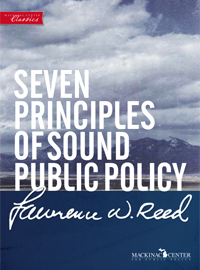
Seven  Principles cover

Revised June 2006

When I first took the podium to deliver the speech reprinted here, I was addressing the Detroit Economic Club, a world-renowned forum for sharing ideas. But even with my natural optimism and the publicity associated with that prestigious venue, I never imagined the amount of attention the “Seven Principles of Sound Public Policy” would receive in the days and years that followed.

By last count, I’ve given this address in about 100 different places, including probably 20 states and a dozen foreign countries. The text has been translated into at least 12 foreign languages, including Chinese, Korean, Spanish and Kiswahili. In a twist stranger than fiction, I was invited to deliver this speech at the People’s University in Beijing. Readers familiar with my views or with the seven principles will no doubt be struck by the irony — and the victory — inherent in my espousing these principles in the heart of the world’s largest communist state.

Why has interest in the “Seven Principles of Sound Public Policy” exceeded all expectations? Looking back, I think it was due to a gamble I took when I first wrote and delivered this address. At the time, I began by telling the audience:

“I know that (the Detroit Economic Club) has heard many policy addresses by many leaders in government, business and academia — policy addresses that dealt in some detail with specific pressing issues of the day, from transportation to education to health care and countless other important topics. At the Mackinac Center for Public Policy, our specialty is researching and recommending detailed prescriptions for today’s policy questions, and I thought about doing that very thing here today.

“But upon reflection, I decided instead to step back from the minutiae of any particular issue and offer you something a little different: a broad-brush approach that is applicable to every issue. I’d like us all to think about some very critical fundamentals, some bedrock concepts that derive from centuries of experience and economic knowledge. They are, in my view, eternal principles that should form the intellectual backdrop to what we do as policymakers inside and outside of government.”

The reception the speech received that day and in the years since suggests that at bottom, people value a serious attempt to deal with issues that matter. They recognize that principles that can be expressed in simple words are not necessarily simplistic.

Moreover, they realize that approaching issues with an open mind does not mean approaching them with an empty one. After all, we’ve learned a few things over the centuries. It’s not uninformed bias that prompts us without debate to accept the notion that the sun comes up in the east. It isn’t blind ideology that tells us that a representative republic is superior to dictatorship or monarchy. The general assumption that private property and free-market economies are superior to state ownership and central planning is no longer just an opinion; rather, it is now a settled truth for people who value reason, logic, facts, evidence, economics and experience.

The seven principles of sound public policy that I want to share with you are pillars of a free economy. We can differ on exactly how any one of them may apply to a given issue, but the principles themselves, I believe, are settled truths.

These principles are not original with me; I’ve simply collected them in one place. They are not the only pillars of a free economy or the only settled truths, but they do provide a solid foundation. In my view, if the cornerstone of every state and federal building were emblazoned with these principles — and more importantly, if every legislator understood and attempted to be faithful to them — we’d be a much stronger, much freer, more prosperous and far better-governed people.

One

Free people are not equal, and equal people are not free.

First, I should clarify the kind of “equalness” to which I refer in this statement. I am not referring to equality before the law — the notion that you should be judged innocent or guilty of an offense based upon whether or not you did it, with your race, sex, wealth, creed, gender or religion having nothing to do with the outcome. That’s an important foundation of Western civilization, and though we often fall short of it, I doubt that anyone here would quarrel with the concept.

No, the “equalness” to which I refer is all about income and material wealth — what we earn and acquire in the marketplace of commerce, work and exchange. I’m speaking of economic equality. Let’s take this first principle and break it into its two halves.

Free people are not equal. When people are free to be themselves, to be masters of their own destinies, to apply themselves in an effort to improve their well-being and that of their families, the result in the marketplace will not be an equality of outcomes. People will earn vastly different levels of income; they will accumulate vastly different levels of wealth. While some lament that fact and speak dolefully of “the gap between rich and poor,” I think people being themselves in a free society is a wonderful thing. Each of us is a unique being, different in endless ways from any other single being living or dead. Why on earth should we expect our interactions in the marketplace to produce identical results?

We are different in terms of our talents. Some have more than others, or more valuable talents. Some don’t discover their highest talents until late in life, or not at all. Magic Johnson is a talented basketball player. Should it surprise anyone that he makes infinitely more money at basketball than I ever could? Will Kellogg didn’t discover his incredible entrepreneurial and marketing talent until age 46; before he struck out on his own to start the Kellogg Company, he was making about $25 a week doing menial jobs for his older brother in a Battle Creek sanitarium.

We are different in terms of our industriousness, our willingness to work. Some work harder, longer and smarter than others. That makes for vast differences in how others value what we do and in how much they’re willing to pay for it.

We are different also in terms of our savings. I would argue that if the president could somehow snap his fingers and equalize us all in terms of income and wealth tonight, we would be unequal again by this time tomorrow because some of us would save our money and some of us would spend it. These are three reasons, but by no means the only three reasons, why free people are simply not going to be equal economically.

Equal people are not free, the second half of my first principle, really gets down to brass tacks. Show me a people anywhere on the planet who are indeed equal economically, and I’ll show you a very unfree people. Why?

The only way in which you could have even the remotest chance of equalizing income and wealth across society is to put a gun to everyone’s head. You would literally have to employ force to make people equal. You would have to give orders, backed up by the guillotine, the hangman’s noose, the bullet or the electric chair. Orders that would go like this: Don’t excel. Don’t work harder or smarter than the next guy. Don’t save more wisely than anyone else. Don’t be there first with a new product. Don’t provide a good or service that people might want more than anything your competitor is offering.

Believe me, you wouldn’t want a society where these were the orders. Cambodia under the communist Khmer Rouge in the late 1970s came close to it, and the result was that upwards of 2 million out of 8 million people died in less than four years. Except for the elite at the top who wielded power, the people of that sad land who survived that period lived at something not much above the Stone Age.

What’s the message of this first principle? Don’t get hung up on differences in income when they result from people being themselves. If they result from artificial political barriers, then get rid of those barriers. But don’t try to take unequal people and compress them into some homogenous heap. You’ll never get there, and you’ll wreak a lot of havoc trying.

Confiscatory tax rates, for example, don’t make people any more equal; they just drive the industrious and the entrepreneurial to other places or into other endeavors while impoverishing the many who would otherwise benefit from their resourcefulness. Abraham Lincoln is reputed to have said, “You cannot pull a man up by dragging another man down.”

Two

What belongs to you, you tend to take care of;
what belongs to no one or everyone tends to fall into disrepair.

This essentially illuminates the magic of private property. It explains so much about the failure of socialized economies the world over.

In the old Soviet empire, governments proclaimed the superiority of central planning and state ownership. They wanted to abolish or at least minimize private property because they thought that private ownership was selfish and counterproductive. With the government in charge, they argued, resources would be utilized for the benefit of everybody.

What was once the farmer’s food became “the people’s food,” and the people went hungry. What was once the entrepreneur’s factory became “the people’s factory,” and the people made do with goods so shoddy there was no market for them beyond the borders.

We now know that the old Soviet empire produced one economic basket case after another, and one ecological nightmare after another. That’s the lesson of every experiment with socialism: While socialists are fond of explaining that you have to break some eggs to make an omelette, they never make any omelettes. They only break eggs.

If you think you’re so good at taking care of property, go live in someone else’s house, or drive their car, for a month. I guarantee you neither their house nor their car will look the same as yours after the same period of time.

If you want to take the scarce resources of society and trash them, all you have to do is take them away from the people who created or earned them and hand them over to some central authority to manage. In one fell swoop, you can ruin everything. Sadly, governments at all levels are promulgating laws all the time that have the effect of eroding private property rights and socializing property through “salami” tactics — one slice at a time.

Three

Sound policy requires that we consider long-run effects and all people, not simply short-run effects and a few people.

It may be true, as British economist John Maynard Keynes once declared, that “in the long run, we’re all dead.” But that shouldn’t be a license to enact policies that make a few people feel good now at the cost of hurting many people tomorrow.

I can think of many such policies. When Lyndon Johnson cranked up the Great Society in the 1960s, the thought was that some people would benefit from a welfare check. We now know that over the long haul, the federal entitlement to welfare encouraged idleness, broke up families, produced intergenerational dependency and hopelessness, cost taxpayers a fortune and yielded harmful cultural pathologies that may take generations to undo. Likewise, policies of deficit spending and government growth — while enriching a few at the start — have eaten at the vitals of the nation’s economy and moral fiber for decades.

This principle is actually a call to be thorough in our thinking. It says that we shouldn’t be superficial in our judgments. If a thief goes from bank to bank, stealing all the cash he can get his hands on, and then spends it all at the local shopping mall, you wouldn’t be thorough in your thinking if all you did was survey the store owners to conclude that this guy stimulated the economy.

We should remember that today is the tomorrow that yesterday’s poor policymakers told us we could ignore. If we want to be responsible adults, we can’t behave like infants whose concern is overwhelmingly focused on self and on the here-and-now.

Four

If you encourage something, you get more of it; if you discourage something, you get less of it.

You and I as human beings are creatures of incentives and disincentives. We respond to incentives and disincentives. Our behavior is affected by them, sometimes very powerfully. Policymakers who forget this will do dumb things like jack up taxes on some activity and expect that people will do just as much of it as before, as if taxpayers are sheep lining up to be sheared.

Remember when George Bush (the first one) reneged under pressure on his 1988 “No New Taxes!” pledge? We got big tax hikes in the summer of 1990. Among other things, Congress dramatically boosted taxes on boats, aircraft and jewelry in that package. Lawmakers thought that since rich people buy such things, we should “let ‘em have it” with higher taxes. They expected $31 million in new revenue in the first year from the new taxes on those three things. We now know that the higher levies brought in just $16 million. We shelled out $24 million in additional unemployment benefits because of the people thrown out of work in those industries by the higher taxes. Only in Washington, D.C., where too often lawmakers forget the importance of incentives, can you aim for 31, get only 16, spend 24 to get it and think that somehow you’ve done some good.

Want to break up families? Offer a bigger welfare check if the father splits. Want to reduce savings and investment? Double-tax ‘em, and pile on a nice, high capital gains tax on top of it. Want to get less work? Impose such high tax penalties on it that people decide it’s not worth the effort.

Right now in both state and federal legislatures, much attention is being given to the question of how to deal with deficits due to recession and declining revenues. At the Mackinac Center, we believe that government ought to deal with such circumstances the way you and I and families all across the state deal with similar circumstances: curtail spending. That’s especially true if we want to stimulate a weak economy so it will produce more jobs and more revenue. When the patient is ill, the doctor doesn’t bleed him.

Five

Nobody spends somebody else’s money as carefully as he spends his own.

Ever wonder about those stories of $600 hammers and $800 toilet seats that the government sometimes buys? You could walk the length and breadth of this land and not find a soul who would say he’d gladly spend his own money that way. And yet this waste often occurs in government and occasionally in other walks of life, too. Why? Because invariably, the spender is spending somebody else’s money.

Economist Milton Friedman elaborated on this some time ago when he pointed out that there are only four ways to spend money. When you spend your own money on yourself, you make occasional mistakes, but they’re few and far between. The connection between the one who is earning the money, the one who is spending it and the one who is reaping the final benefit is pretty strong, direct and immediate.

When you use your money to buy someone else a gift, you have some incentive to get your money’s worth, but you might not end up getting something the intended recipient really needs or values.

When you use somebody else’s money to buy something for yourself, such as lunch on an expense account, you have some incentive to get the right thing but little reason to economize.

Finally, when you spend other people’s money to buy something for someone else, the connection between the earner, the spender and the recipient is the most remote — and the potential for mischief and waste is the greatest. Think about it — somebody spending somebody else’s money on yet somebody else. That’s what government does all the time.

But this principle is not just a commentary about government. I recall a time, back in the 1990s, when the Mackinac Center took a close look at the Michigan Education Association’s self-serving statement that it would oppose any competitive contracting of any school support service (like busing, food or custodial) by any school district anytime, anywhere. We discovered that at the MEA’s own posh, sprawling East Lansing headquarters, the union did not have its own full-time, unionized workforce of janitors and food service workers. It was contracting out all of its cafeteria, custodial, security and mailing duties to private companies, and three out of four of them were nonunion!

So the MEA — the state’s largest union of cooks, janitors, bus drivers and teachers — was doing one thing with its own money and calling for something very different with regard to the public’s tax money. Nobody — repeat, nobody — spends someone else’s money as carefully as he spends his own.

Six

Government has nothing to give anybody except what it first takes from somebody, and a government that’s big enough to give you everything you want is big enough to take away everything you’ve got. [Partial quote from Gerald Ford]

This is not some radical, ideological, anti-government statement. It’s simply the way things are. It speaks volumes about the very nature of government. And it’s perfectly in keeping with the philosophy and advice of America’s Founders.

It’s been said that government, like fire, is either a dangerous servant or a fearful master. Think about that for a moment. Even if government is no bigger than our Founders wanted it to be, and even if it does its work so well that it indeed is a servant to the people, it’s still a dangerous one! As Groucho Marx once said of his brother Harpo, “He’s honest, but you’ve got to watch him.” You’ve got to keep your eye on even the best and smallest of governments because, as Jefferson warned, the natural tendency is for government to grow and liberty to retreat. You can’t wind it up and walk away from it; it takes eternal vigilance to keep it in its place and keep our liberties secure.

The so-called “welfare state” is really not much more than robbing Peter to pay Paul, after laundering and squandering much of Peter’s wealth through an indifferent, costly bureaucracy. The welfare state is like feeding the sparrows through the horses, if you know what I mean. Put yet another way, it’s like all of us standing in a big circle, with each of us having one hand in the next guy’s pocket. Somebody once said that the welfare state is so named because in it, the politicians get well and the rest of us pay the fare.

A free and independent people do not look to government for their sustenance. They see government not as a fountain of “free” goodies, but rather as a protector of their liberties, confined to certain minimal functions that revolve around keeping the peace, maximizing everyone’s opportunities and otherwise leaving us alone. There is a deadly trade-off to reliance upon government, as civilizations at least as far back as ancient Rome have painfully learned.

When your congressman comes home and says, “Look what I brought for you!” you should demand that he tell you who’s paying for it. If he’s honest, he’ll tell you that the only reason he was able to get you something was that he had to vote for the goodies that other congressmen wanted to take home — and you’re paying for all that, too.

Seven

Liberty makes all the difference in the world.

Just in case the first six principles didn’t make the point clearly enough, I’ve added this as my seventh and final one.

Liberty isn’t just a luxury or a nice idea. It’s much more than a happy circumstance or a defensible everyday concept. It’s what makes just about everything else happen. Without it, life is a bore at best. At worst, there is no life at all.

Public policy that dismisses liberty or doesn’t preserve or strengthen it should be immediately suspect in the minds of a vigilant people. They should be asking, “What are we getting in return if we’re being asked to give up some of our freedom?” Hopefully, it’s not just some short-term handout or other “mess of pottage.” Ben Franklin went so far as to advise us, “Those who would give up essential Liberty, to purchase a little temporary Safety, deserve neither Liberty nor Safety.”

Too often today, policymakers give no thought whatsoever to the general state of liberty when they craft new policies. If it feels good or sounds good or gets them elected, they just do it. Anyone along the way who might raise liberty-based objections is ridiculed or ignored. Today, government at all levels consumes more than 42 percent of all that we produce, compared with perhaps 6 percent or 7 percent in 1900. Yet few people seem interested in asking the advocates of still more government such cogent questions as, “Why isn’t 42 percent enough?”; “How much more do you want?”; or, “To what degree do you think a person is entitled to the fruits of his labor?”

~~~~~~~~~~~~~~~~

I yearn for the day when all Americans practice these seven principles. I think they are profoundly important. Our past devotion to them, in one form or another, explains how and why we fed, clothed and housed more people at higher levels than any other nation in the history of the planet. And these principles are key to preserving that crucial element of life we call liberty. Thanks for the opportunity to share them with you today and thanks for whatever you may do from this day forward to put these principles into common practice.

You Can Help

If you would like to help us promote ideas like those you’ve read here, we invite you to contact the office of the Mackinac Center for Public Policy for information. Most importantly, we invite you to support the Mackinac Center for Public Policy with a generous, tax-deductible contribution and to think about including us in your estate plan.

The Mackinac Center for Public Policy is a 501(c)(3) organization under the U.S. Internal Revenue Code. We are not lobbyists, nor do we affiliate with or endorse particular legislation, candidates or political parties. We promote freedom, free markets and civil society through studies and commentaries, workshops for high school debaters and a wide array of other educational publications and events for targeted audiences, including legislators, students, teachers, the media, other institute leaders in the United States and abroad, and the general public. We have been extraordinarily effective on issues as diverse as education reform, school choice, privatization, labor law, taxes, government spending, health care and economic development.

We neither seek nor would we ever accept any funding from any level of government. We believe this helps prove that civil society can support worthwhile causes through voluntary means. All that we do is made possible by the support of hundreds of individuals, foundations and businesses. Please join us.